Filed your ITR and heaved a sigh of relief? Hold that thought.
Uploading your return is only half the job. The other half is verification, which most taxpayers forget that you also need to verify it within the prescribed time for the return to be treated as valid.
If you don't verify your ITR within 30 days of filing, it's treated as invalid. An invalid return cannot be processed as a valid return, which can affect matters such as a refund and may lead to other consequences.
Here's everything you need to know about this rule and how good ITR filing software can help you never miss it.
What Happens If You Do Not Verify Your ITR After Filing?
Uploading your return online isn't the finish line; it's just step one. The Income Tax Department needs confirmation that you actually filed it, and verification is that confirmation.
Skip it, and here's what follows:
1. Your ITR will Become Invalid
Most importantly, an ITR that is not verified within the prescribed time is treated as invalid. An unverified return cannot proceed as a validly verified return unless the applicable verification or condonation process is completed.
For example, Rahul files his ITR on 25 July but forgets to complete verification. If he does not verify the return within the prescribed 30-day period, the return may ultimately be treated as invalid unless the applicable condonation process is approved.
2. It's Treated Like You Never Filed
The effects of an unverified ITR may be similar to the effects of filing no ITR at all.
It becomes critical in those cases where either there is tax payable by the taxpayer or the due date for filing the return has been lapsed for the taxpayer and the late fee follows.
The Income Tax Department has noted that the non-verification of the return will invite consequences under the applicable income-tax law for the relevant assessment year or tax year.
3. Your Refund Gets Stuck
If you are expecting a refund of income tax, then your return should be successfully verified and processed for you to receive your refund.
Note: It is not always a lack of verification that leads to delayed refunds; there may be other problems with bank accounts or incorrect details.
4. Late Verification Can Mean Late-Filing Trouble
If an ITR is uploaded within the applicable due date but verified after 30 days window, the date of e-verification or receipt of the duly verified ITR-V is treated as the date of furnishing the return.
That single shift can bring:
Section 234F fees
Interest on pending tax
Lost benefits tied to on-time filing
The exact damage depends on your income and your specific filing year.
How Long Do You Actually Have?
You have 30 days from the date of filing/uploading the return to complete e-verification or submit the ITR-V.
A lot of taxpayers still remember the old 120-day rule and assume they have more breathing room. They don't. The 30-day timeline has been applicable to returns filed from 1 August 2022 onwards.
| ITR Uploaded | Verified On | Date Treated as Filing Date |
| 5 July | 10 July | 5 July |
| 5 July | 25 July | 5 July |
| 5 July | 10 August | 10 August |
Verify within 30 days, and your original date sticks. Cross that line, and the verification date becomes your new "filing date" with all the consequences that come with it.
If the return is not verified within the prescribed period, it is treated as invalid, although a condonation request may be available for genuine delays.
How to Verify Your ITR (It's Faster Than You Think)
No queues, no paperwork. The verification process can generally be completed online through the e-Filing portal.
Step 1: Log in
Head to incometax.gov.in and sign in with your credentials.
Step 2: Find the e-Verify option
Go to e-File → Income Tax Returns → e-Verify ITR, then pick the return that's pending.
Step 3: Pick your method
Aadhaar OTP - quickest, if your mobile is linked
Bank Account EVC - via a pre-validated account
Demat Account EVC - for eligible demat holders
Net banking - through supported banks
Digital Signature Certificate (DSC)- required for certain entities
Offline ITR-V - post the signed form to CPC, Bengaluru – 560500
What If You Missed the 30-Day Verification Deadline?
If you have not been able to meet the deadline, you should not disregard the matter.
You may even be allowed to apply for a condonation request for the delay. However, there is no guarantee of acceptance of the request.
What is a Condonation Request?
A condonation request involves seeking approval from the Income Tax Department for the delay due to some valid or genuine reason.
Genuine reasons for delay may include:
Travel or no mobile access
Technical glitches during verification
Genuine emergencies
Misunderstood process
Steps to take:
First, check the status of your tax returns
Find out whether it is invalid or just pending
Locate the condonation request on the e-Filing portal
Submit your request with the correct details
Do as instructed on the portal
Don't simply file another return without first checking the status and options available for your unverified return. In eligible cases, you may be able to discard the unverified return and file a fresh one, but discarding is irreversible and can have late-filing implications.
Can You Just Discard It and Start Over?
Sometimes, yes. The portal gives you the ability to delete a return that is eligible for verification. The discard facility is available only for eligible returns with an Unverified/Pending for verification status and within the applicable period specified by the Department.
However, here comes the twist: once deleted, it cannot be undone
Before you hit discard, check whether your original filing was within the due date and whether refiling brings any fresh penalties.
Mistakes Taxpayers Keep Making
1. Assuming the acknowledgement means "done"
2. Ignoring SMS and email alerts from the department
3. Waiting until day 29 to verify
4. Never checking their actual ITR status
5. Forgetting to update their registered mobile number
Checking your status regularly, such as pending, verified, processed, or invalid, catches problems while they're still fixable.
Where ITR Filing Software Actually Helps
This is exactly the gap good ITR filing software fills.
Instead of relying on memory or sticky notes, the right software keeps things organised:
1. Income and deduction tracking
2. Accurate tax calculations
3. Return preparation
4. Filing history in one place
5. Verification/status tracking, where supported
6. Reminders, where supported
A business owner in Surat juggling multiple filings a year benefits hugely from this kind of structure; nothing slips through unnoticed.
That said, software supports the process; it doesn't replace your responsibility. Always confirm your final verification status directly on the official portal.
FAQs
1. What happens if I don't verify my ITR within 30 days?
It's treated as invalid. Processing stops, and you may face the same consequences as not filing at all, though a condonation request may help in genuine cases.
2. Can I verify my ITR after 30 days?
Yes. If verification is completed after 30 days, the date of e-verification or receipt of the duly verified ITR-V is treated as the date of furnishing the return, and applicable late-filing consequences may follow.
3. Will I receive my refund even if I do not verify my return?
No, refunds will be processed only after successful verification of your return.
4. Will verification be done automatically using ITR filing software?
Software will help you keep track of Return status and not forget it, but in reality, you have to do it manually through the portal.
5. Can I file a new ITR if my old one wasn't verified?
Often yes, by discarding the unverified return, but this is irreversible, so check your deadline and consequences first.
Conclusion
An unverified ITR is an unfinished ITR no matter how complete it looks on your screen.
Whether you're salaried, self-employed, freelancing or running a business, make verification a habit rather than an afterthought.
Good ITR filing software can help organise your return preparation and, where supported, keep verification and filing status visible. But the final verification should always be confirmed on the official Income Tax e-Filing portal.
ITR Verification, Income Tax Return, ITR Filing, Income Tax
Related Blogs


All in one Software
- Income Tax Software
- TDS & TCS Software
- Audit e-filing Software
- CMA Data Software










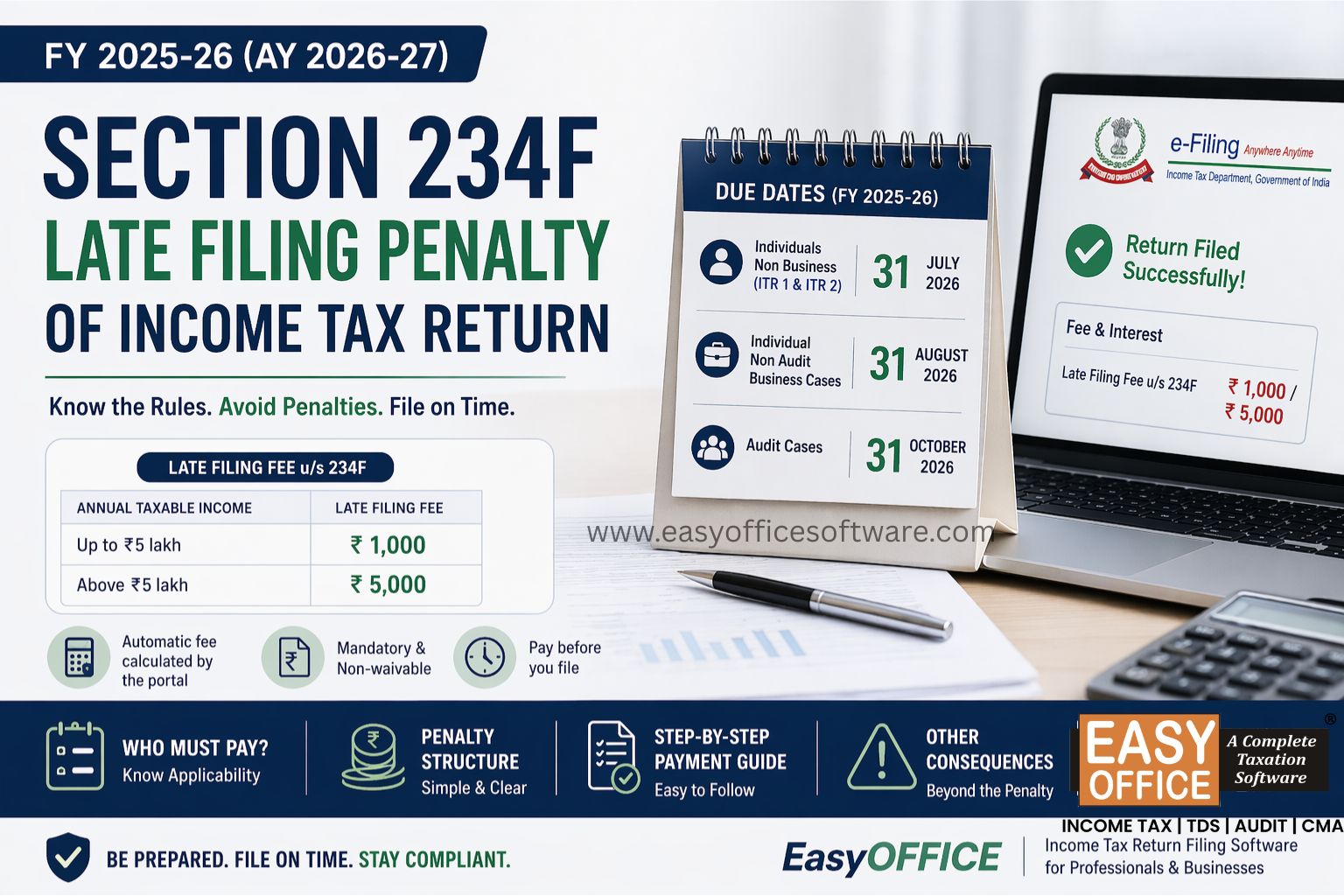
Penalty for Late Filing of Income Tax Return for FY 2025-26 – Section 234F of Income Tax Act 1961
#ITR